Previous lecture series
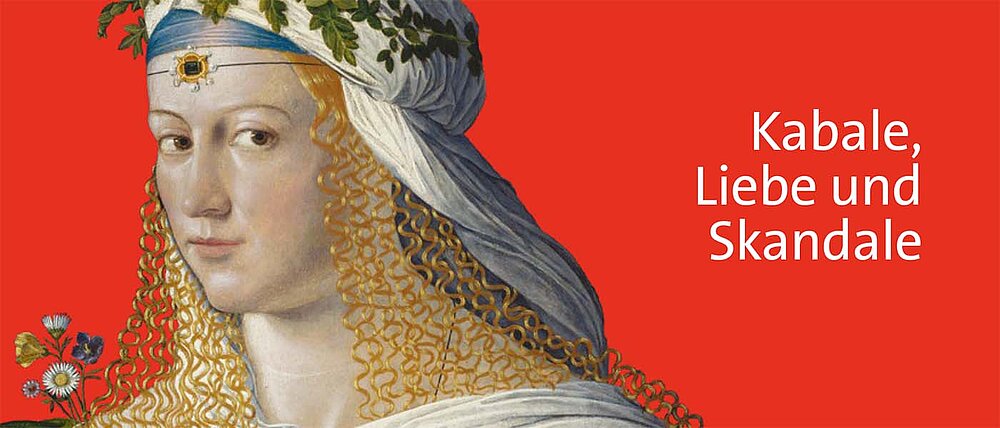
The connection to Schiller's drama "Kabale und Liebe", which is implied in the title of the lecture series, is unmistakable. Love knows no law, sings Carmen in Bizet's opera, it does not abide by social rules and is always good for scandal. However, the lecture series not only presents examples of passionate love and vile intrigues in literature, the visual arts and music that have sprung from the imagination of their respective creators. As history shows, real scandals led to tangible legal disputes, some of which were of the highest constitutional significance and were to have far-reaching consequences and which - think of the divorce of King Henry VIII of England, for example - can still be traced today. The role of the Church in these proceedings in general, the structure of early matrimonial law and which courts were even called upon to hear cases also become clear. The thirteen lectures, for which speakers from various historical sub-disciplines, including art, church, literature, music and legal history, have been recruited, range from the Old Testament to musical theatre around 1900, from China in the Tang period to England.
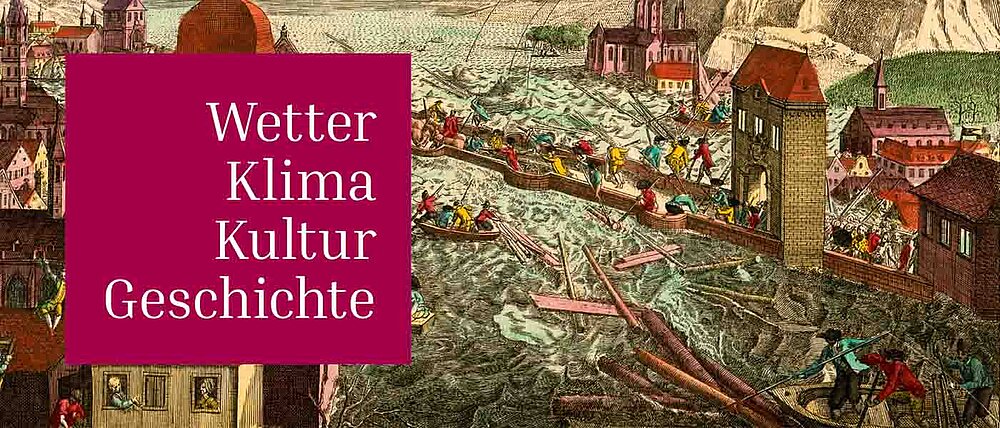
Hot summers, lack of rainfall, burning forests, hurricanes, rising sea levels - these and similar phenomena make it clear that climate change is one of the most fundamental challenges of the 21st century, even in our latitudes. However, the close interdependence of weather, climate, culture and history is nothing new. Even in past centuries, storms, volcanic eruptions or climate changes such as the so-called Little Ice Age had a considerable impact on society, culture and politics.
Climate has long since become a field of research in the humanities and social sciences. All too often, however, it is understood as a problem of the present and the future. The lecture series aims to contribute to an understanding of weather and climate as cultural, historical and social phenomena. At the same time, it raises the question of the extent to which an exemplary look at the cultural history of climate can provide models for overcoming current and future crises.
10 December 2022 marks the 75th anniversary of the proclamation of the Universal Declaration of Human Rights by the United Nations. It was preceded by numerous disputes and developments in the history of ideas and was a response to experiences of injustice, particularly the Second World War and the Holocaust.
In the struggle for freedom and justice, the course was set over centuries - with some resistance - and the foundations were laid for the various declarations of human rights and the international treaties based on them, which are still as relevant today as they are under threat. The lecture will unfold exemplary stages and motives of this struggle in history. It will look at the genesis and emergence of human rights, as well as their justification. And it asks about the validity and persuasiveness of human rights in the face of current challenges and problems.
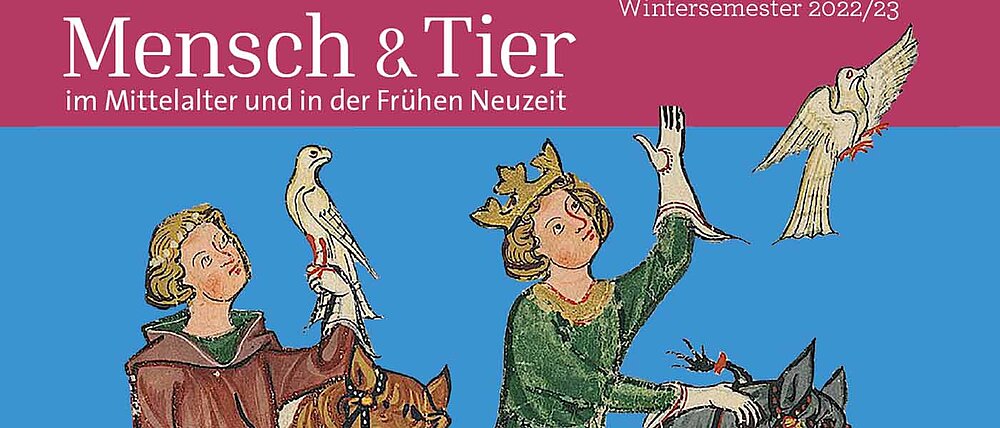
To this day, humans and animals share a close relationship in terms of habitat and livelihood. A wide range of animal products have contributed and continue to contribute to securing human existence. The keeping of animals in human hands in the pre-modern era was primarily characterised by their agricultural and military use, but animals were also valued as playmates, hunting companions or entertainers in the human household and served not least to represent status.
The tense relationship between humans and animals has only recently become the focus of interest in the humanities and cultural studies, but has now established itself as a field of research under the umbrella of inter- and transdisciplinary human-animal studies. The lecture series aims to contribute to this by presenting individual aspects of the human-animal relationship from historical, art-historical, literary and legal-historical perspectives in twelve lectures.
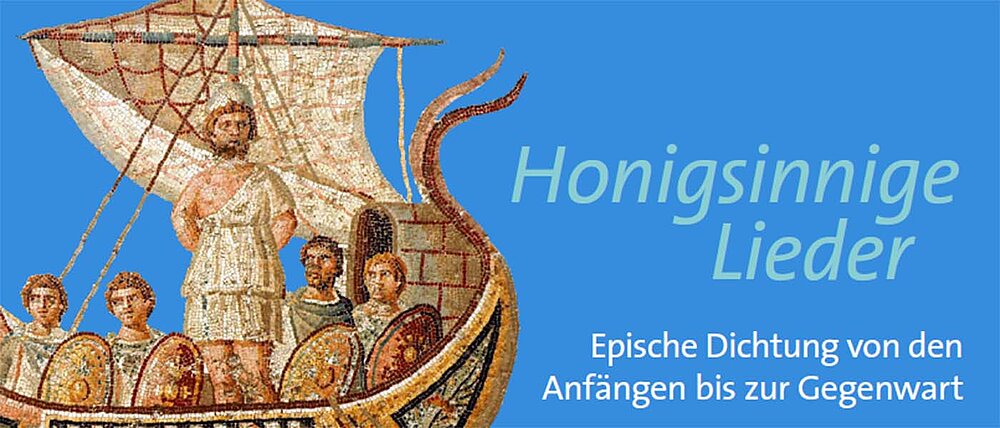
The Greeks compared poetry to honey because both were associated with the pleasant sensation of sweetness. The artificial word "honeyed", modelled on the Greek meliphron, describes everything that delights the heart and senses: wine, art and poetry, the highest form of which is the epic. Epic storytelling moves between high-flying fantasy and detailed observation of everyday life, it is sometimes imitation, sometimes sublimation of reality, it encompasses all styles - high, low, tragic, comic. Epic storytelling is a phenomenon that transcends cultures and epochs. The lecture series for the 2022 summer semester will take its listeners from the ancient Orient to classical antiquity to India and back to Europe from the Middle Ages to the present day. All the texts presented continue to unfold the sweetness they contain today, if only the listener opens their senses to them. The event invites the Würzburg audience to do just that.
Judaism has been an integral part of European culture since antiquity. The lecture series reflects on Jewish life from various specialist perspectives in its historical, local and contemporary dimensions in German-speaking countries from the Middle Ages to the present day. The Franconian region and the history of the city of Würzburg form a particular focus. The focus also extends from philosophical and literary aspects of Jewish culture to the current situation of Judaism in Germany.
Storytelling about crises as an everyday practice has been with us for much longer than current debates about the current age of multiple crises. Narrative is much more than simply a practice of depicting or coping with experiences: it also means shaping the world. This volume focuses on narratives from the pre-modern era to the present, which present crises not only as a threat to a given order, but also as an opportunity for fundamental change and a new beginning. Those who narrate crises as opportunities imagine a future worth striving for. And last but not least, it is these narratives that mobilise the many and thus enable the potential for social change and ultimately shape new realities. This volume combines interdisciplinary approaches to the study of crises and the visual, oral, written, media, artistic, etc. narratives that accompany them. narratives. The aim is to familiarise readers with a spectrum of crisis experiences from the Middle Ages through the early modern period to the present day. Similarities and differences are thus made fruitful for today's understanding of current crisis phenomena. This also helps us to localise ourselves in a rapidly changing world.
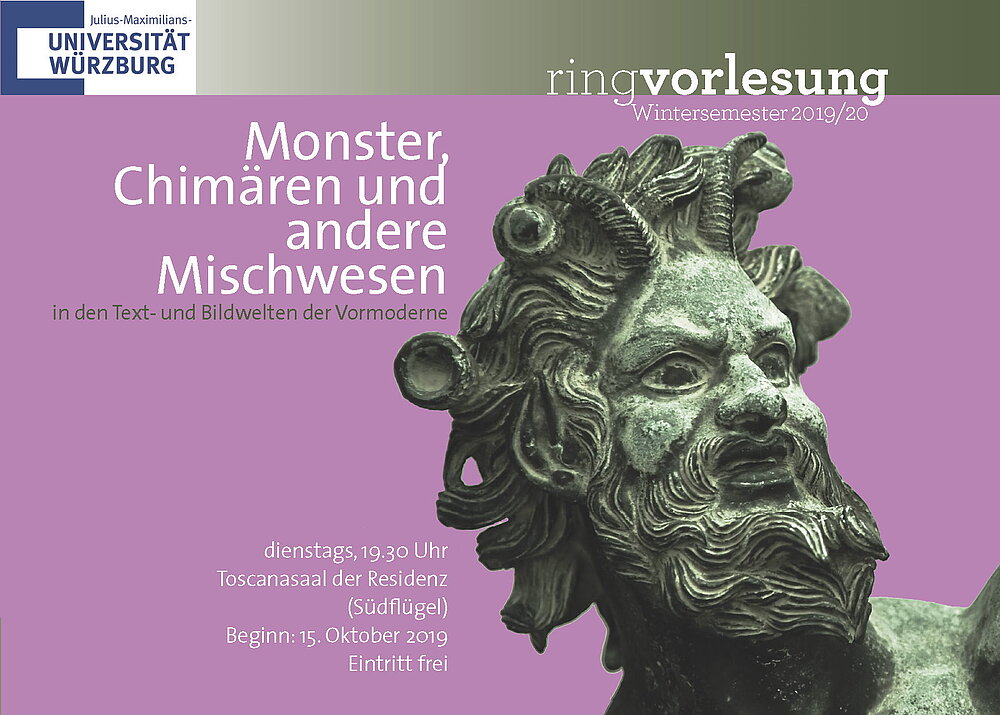
Monsters of terrifying size and ugliness, misshapen figures or hybrids half human, half animal, creatures in any case that deviate considerably from the human norm, have fired the imagination from time immemorial. The imaginary world of antiquity and the Middle Ages is full of such creatures: Fine art and literature bear eloquent witness to this. Some of them were also included in encyclopaedic collections of knowledge. However, the ideas and symbolic meanings attached to the monstrous deviant are as varied as the forms in which they appear. The aim of our lecture series, in which ancient orientalists, theologians, classical archaeologists, Indologists, art historians, literary and cultural scholars are involved, is to show this. The key questions are: Do certain types of texts and images favour the manifestations of the monstrous or hybrid and, if so, which ones? What is the narrative and iconic potential of such figures, and what epistemological interest is attached to them? What do the phantasmagorias express, how can they be interpreted?
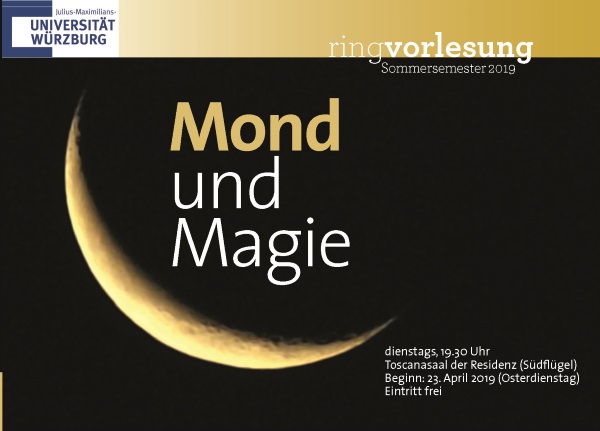
50 years ago, on 20 July 1969, the first manned lunar module landed on the Earth's satellite. For us, this anniversary is an occasion to put the moon at the centre of the lecture series. It has preoccupied people since the earliest times, it plays an important role in magical practices, has been the destination of (imagined) journeys since early times and is a recurring motif in the visual arts, poetry and music. The lecture will trace these areas from ancient Egyptian times to the 20th century and thus trace the cultural history of the moon and its significance for art. The physical theories about the formation of the moon, the moon landing itself and the role of the conquest of space during the Cold War will round off the programme.
In recent years, intermediality has developed into a central research paradigm at the interface of literature, art and media studies. It is about the relationships between individual media: about their combination and competition, about their transformation and about the change from one medium to another. This paradigm has a historical dimension: the pre-modern era in particular can be regarded as the heyday of intermediality. The lecture series takes this into account and focuses on the relationships between media in the Middle Ages and early modern times: it is about the tense coexistence of orality and writing in the High Middle Ages, about "translations" of voice into writing (and back again), about combinations of text and image in illustrated manuscripts and early prints, about the linguistic representation of works of art in medieval texts, for example, about the transformation of text and musical notes into vocality, about multimedia syntheses in theatre and opera and much more. The aim of the lecture series is to describe, classify and systematise this variety of manifestations and functions of pre-modern intermediality using case studies, while also taking into account theoretical reflections on the interplay of media.
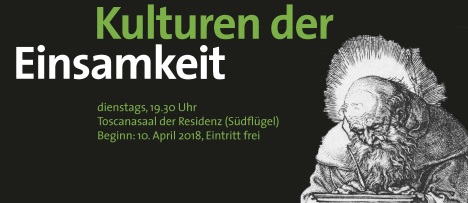
Loneliness is an international and transhistorical phenomenon and, as an anthropological constant, has continuously inspired artistic treatment. The lecture series describes "cultures of solitude" from early Christian times to the present day and from America to Europe and Asia. Cultural representations of hermits, recluses and loners shed light on how individuals are characterised by a life of solitude and question established social and cultural practices. Loneliness can be freely chosen or forced, temporary or permanent, it can be perceived as liberation or restriction, have physical or psychological triggers and effects and be located in nature or in urban space. The cultural history of loneliness becomes topical due to its relevance to current social challenges and popular trends in lifestyle and behaviour. Our lecture series therefore also raises awareness of current discourses on privacy, data protection, surveillance, new technologies, religious fundamentalism, poverty, old age, illness, simplification, consumerism and ecocriticism.
Anniversaries shape our culture of remembrance. They shape ideas about history and create images of history that convey clear messages. Rarely do they remind us of the contradictory nature of historical developments. In 2017, these can be experienced particularly intensely in Würzburg and the surrounding area, where the commemoration of the Reformation, which focussed on Luther's theses 500 years earlier, is accompanied by the commemoration of the 400th anniversary of the death of Prince-Bishop Julius Echter, who had a lasting impact on the region with his policies in the spirit of Catholic reform. Today, Luther and Julius Echter defy idealisation and, despite their superficial contrast, stand for an era of dynamic change in which the first contours of modern Europe are emerging. The two-semester lecture series of the Centre for Medieval and Early Modern Studies aims to provide an introduction to this period of concentrated cultural and social change and to highlight the ambiguity and diversity of the development potential of the Confessional Age.
Anniversaries shape our culture of remembrance. They shape ideas about history and create images of history that convey clear messages. Rarely do they remind us of the contradictory nature of historical developments. In 2017, these can be experienced particularly intensely in Würzburg and the surrounding area, where the commemoration of the Reformation, which focussed on Luther's theses 500 years earlier, is accompanied by the commemoration of the 400th anniversary of the death of Prince-Bishop Julius Echter, who had a lasting impact on the region with his policies in the spirit of Catholic reform. Today, Luther and Julius Echter defy idealisation and, despite their superficial contrast, stand for an era of dynamic change in which the first contours of modern Europe are emerging. The two-semester lecture series of the Centre for Medieval and Early Modern Studies aims to provide an introduction to this period of concentrated cultural and social change and to highlight the ambiguity and diversity of the development potential of the Confessional Age.
Even in the High Middle Ages, scientists dreamed of large ships, self-moving vehicles ("automobiles") and flying machines, and in the popular novels and epics written from 1150 onwards, the protagonists encounter fighting robots, listen to music automatons with singing birds and barking dogs or climb aboard a diving bell to explore the seabed. The fascination of the artificial and automatonlike must have been considerable, and no less great was the attraction of improving people's living conditions through technical inventions and creating new things that were not intended in nature. Much of this remained in the realm of fantasy, but scientists, architects and craftsmen also produced a remarkable number of technical innovations. Visible signs of such medieval inventiveness can still be seen today in the mechanical tower clocks and even more so in the Gothic cathedrals, which represent a highlight of medieval building technology. By focusing on such pre-modern visions, both realised and unrealisable, the lecture series - featuring historians, technology and art historians as well as literary scholars from Germany and abroad - will also raise awareness of where the technological affinity of our present day has its origins.
The narrative appropriation, depiction and evaluation of the world is a basic human need. The history of literature begins with narrative texts that reflect on the origin of the world, the relationship between nature and culture and the relationships between people, and narrative has lost none of its fascination ever since: To this day, narrative is a mode of recognising the truth. But how does this relationship to the world, the preservation and transmission of world knowledge in storytelling become an art form? What possibilities of storytelling have been developed in its long history, and what experiments have been undertaken? These are the guiding questions of the lecture series, which endeavours to describe the art of storytelling using selected examples from world literature. It is organised by literary scholars of Classics, English, German and Romance Studies from the University of Würzburg.
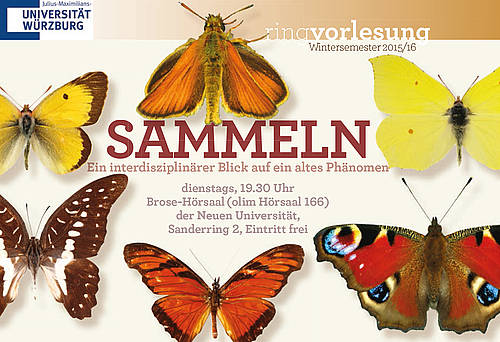
Reading and collecting share their etymological roots - scattered material is collected, read and brought into order. In literature (or literary studies), this process takes place in the form of writing; writing involves collecting, reading, making legible, and the reader can in turn be read. Collecting is a research topic that has also received academic attention in the fields of history, philosophy and museum studies. The lecture series does not view collecting as an exclusively modern phenomenon and therefore deals with questions about the significance of collecting in different times. These questions are interdisciplinary in nature and include questions such as: Who collects? Which objects are collected? Have people always been collectors? Or: How does the motif of collecting appear in texts? The arch spans from the Middle Ages to the age of 'big data'.
While the term 'excess' is predominantly understood in a negative sense today - as a threat, transgression or destruction of socio-cultural structures of order and individual existences - the lecture, which combines the history of literature, culture and religion, attempts to describe excess as a tipping point: as a phenomenon between disorder and order, subversion and affi rmation, loss of control and disciplining. The question is what becomes excess in pre-modern societies, when and how, where it is permitted and where it is not and how the attempt to contain an excess turns back into an excess, but also the communicative performance of art and literature, which perceive and represent the various forms of excess. The lectures deal with this question on the basis of selected subject areas, which at the same time bring various forms of excessiveness into view: Archaism and savagery, acts of ostentatious waste, mystical loss of self, affective excesses such as love, grief and anger, excesses of the body and morality and, finally, formal and ornamental excesses, as they have been encountered not only since the Baroque period.
Cathedrals, castles and old city walls are the visible witnesses of a bygone era. However, we owe much more to the much-maligned Middle Ages and much that is a natural part of our everyday lives: Institutions and structures of political, economic, social and cultural life, vocabulary and language patterns, types of art and literature as well as ways of organising knowledge and much more. The lecture aims to raise awareness of the presence and relevance of the Middle Ages through selected topics. Scholars from Würzburg as well as experts from abroad will take part in the lecture series: historians, art and philosophy historians as well as representatives of medieval Latin and German philology.
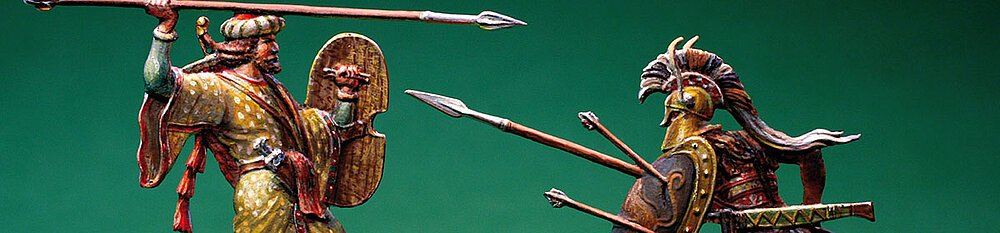
Since time immemorial, people have used the art of storytelling to remember the past, and this is what gives the past its own face.
How has literature succeeded to this day in making historical events vivid and tangible for later generations, and how does art change the perception and evaluation of historical data? What effect do the aesthetic means of language have?
Why does the historical event in a literary narrative have a different impact than the mere facts? How is collective experience condensed in individual stories and what does the interpretation of the past reveal about the time from which the literary testimonies originate? The contributions are dedicated to the literary reverberations of more distant historical dates such as the death of Frederick Barbarossa or the beheading of Charles I through to more recent history: the First World War, the Wannsee Conference in 1942, the bombing campaign, the student revolution in 1968 or 11 September 2001.In each case, the focus is on a literary work in which the date is evoked, transformed, recreated or even denied through the art of storytelling.
Madness is one of the great themes of literature and art, whether as a fascination or a trauma. Homer's Ajax, the mad Roland, Don Quixote or Nathanael in E.T.A. Hoffmann's Sandman are famous examples of this. The lecture series will ask why madness is so attractive for art, how and why art and madness enter into alliances, why art can be madness. The lectures will explore these questions from a (medical) historical and media perspective. They refer to literature, painting, music and film. The spectrum of topics ranges from antiquity and the Middle Ages to the great representations of madness in the Renaissance (Ariosto, Tasso, Cervantes, Shakespeare) and Romanticism (E.T.A. Hoffmann). With contributions on the hysterical heroines of the realists, the splitting of consciousness in American literature and the medical history symptomatic of the modern artistic genius (Van Gogh), psychiatry-critical tendencies and the pathologisation of certain social and gender groups are also addressed. The series of lectures begins and ends in the present day: the way madness is portrayed in modern cult films, in Schoenberg's and Rihm's monodramas and in Martin Walser's novel Muttersohn, published in 2011, confirms the topicality of the subject.
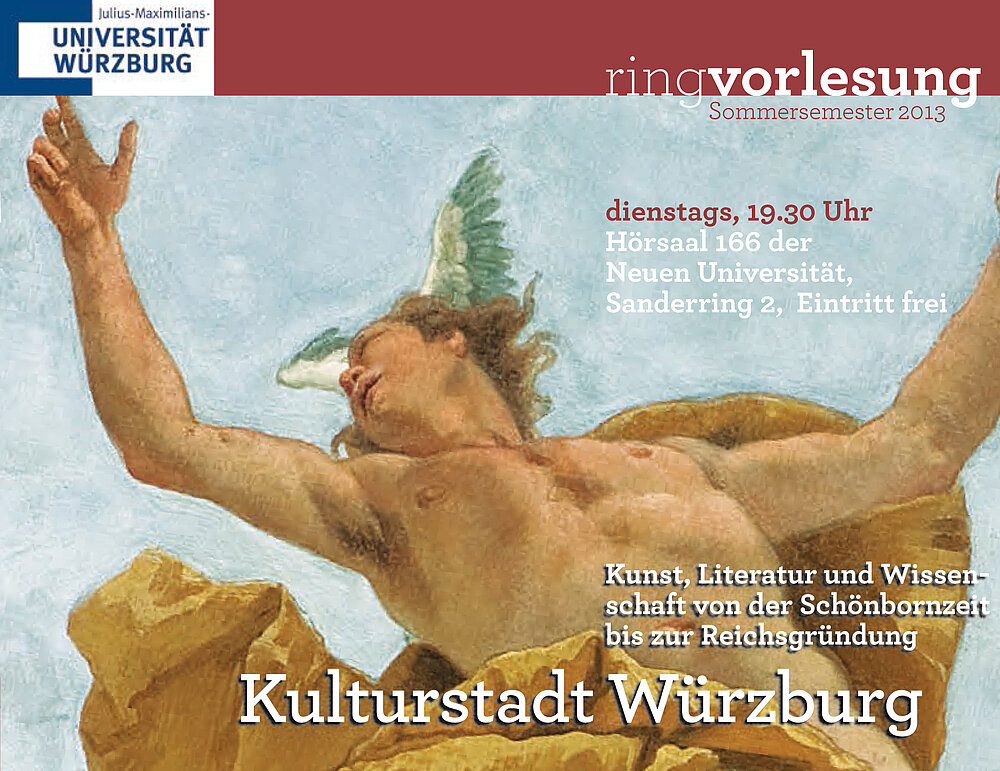
The lecture series continues the cycle begun in the winter semester 2012/13, but now focuses on the period from the middle of the 17th century, the beginning of the Schönborn period, to the late 19th century.
The individual lectures honour outstanding figures in the visual arts, architecture, music, literature and science. They also highlight the historical environment, the prince-bishop's court and other institutions that promoted art, literature and science in Würzburg and thus contributed to the outstanding importance of the Franconian episcopal and university city as a cultural metropolis.
Academics from our university as well as external experts will take part in the lecture series. The spectrum of subjects ranges from theology and German philology to history, art history and musicology.
Würzburg's rich cultural heritage, which has come down to us from the Middle Ages and early modern times, justifies the Franconian episcopal and university city's status as a cultural metropolis.
The lecture series honours outstanding examples of the visual arts, architecture, music and literature. It will also highlight individuals, institutions and cultural techniques that have played a decisive role in the promotion of art, literature and science in Würzburg.
The exhibition will cover the period from around 1300 to the end of the Echter period in the early 17th century.
Scientists from the University of Würzburg as well as renowned external experts are involved. The spectrum of subjects ranges from history and art history, musicology and medical history to Latin and German philology and book studies.
Almost all religions and cultures have developed ideas about the origin of the universe and mankind. A special feature of the biblical creation myth is the idea of divine creation out of nothing, which was created for mankind.
The lecture series is not only dedicated to ancient and modern accounts of the creation story, but also examines the productive transformation and reshaping of the idea of creation in language and literature, music and the visual arts, analogies, shifts into the inauthentic and secular variants. The temporal spectrum of topics ranges from the beginnings of writing to the present day. Scholars from various disciplines, ranging from biblical theology, classical philology and Scandinavian studies to German philology, art history, musicology and astrophysics, will take part in the lecture series.
Since ancient times, "journeys to hell" have been a popular theme in literature, music and the visual arts. This semester's lecture series explores the fascination that such journeys to the underworld, hell and the afterlife still exert today.
Through the interaction of ancient studies, literature, art and the humanities, traditions and formative ideas of "journeys to hell" will be highlighted and analysed with reference to questions of cultural studies. In addition to traditional lines that lead from Homer and Virgil to Dante and Botticelli and far into the modern age, modern "metaphorisations" of journeys to hell will also be examined: In other words, transfers to other areas of imagination in which borderline and deep experiences play a role (such as psychoanalysis, cave research or mining).
Würzburg academics and guest lecturers from other universities are taking part in the lecture series. They will address the topic of "journeys to hell" from the specialist perspectives of Egyptology, classical philology (Greek and Latin studies), theology, ancient and modern German studies, Romance studies, art history, American studies and - in a concluding lecture that goes beyond the humanities - cardiology and intensive care medicine. The diversity of the disciplines involved is intended to visualise the many facets of the topic of "journeys to hell". For pupils, school leavers and first-year students, it also offers the opportunity to familiarise themselves with the working areas and methods of various university disciplines and thus gain inspiration for their own studies.
The arts have repeatedly attempted to find answers and create interpretations of death that confront the individual with sometimes comforting, sometimes terrifying visions of their end; the question of death is therefore not only at the core of literary anthropology, but as such has always been an elementary theme of all the arts. Since the European Enlightenment in the 17th/18th century, we have observed how, with increasing secularisation, literature in particular has taken over the traditional tasks and functions of theology and religious edification. At the same time and in connection with this, the social displacement of death from everyday and family life into institutions such as hospitals, old people's homes or hospices corresponds to an opposing development in the arts, which visualise this existential borderline experience in ever new forms, in all media, including and especially the latest ones, and, if the impression is not misleading, with increasing rather than decreasing intensity, even radicalism. And in Western culture, this is often based on the assumption (or rather the non-exclusion) that death is not a transition to a second, different life, but the end of life. Both modern and pre-modern man are exposed to the same affective dispositions through dying and death, which is why, despite all the variations in individual cases, hopes of redemption or visions of horror, concepts of immortality or expectations of nothingness, exalting or humiliating concepts of self (and others) in the face of death are strikingly similar throughout the different epochs and cultures.